Nectar Robbing
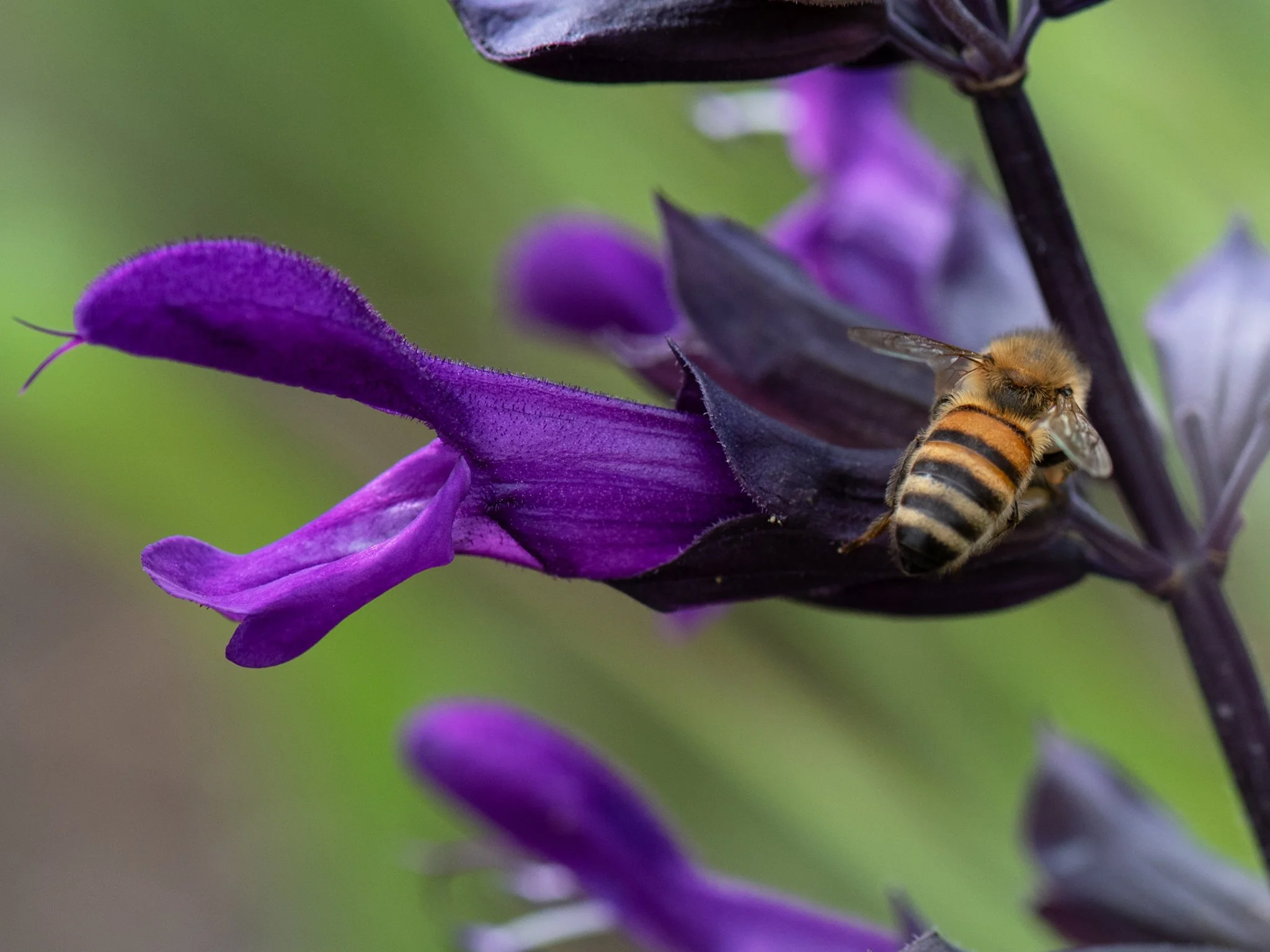
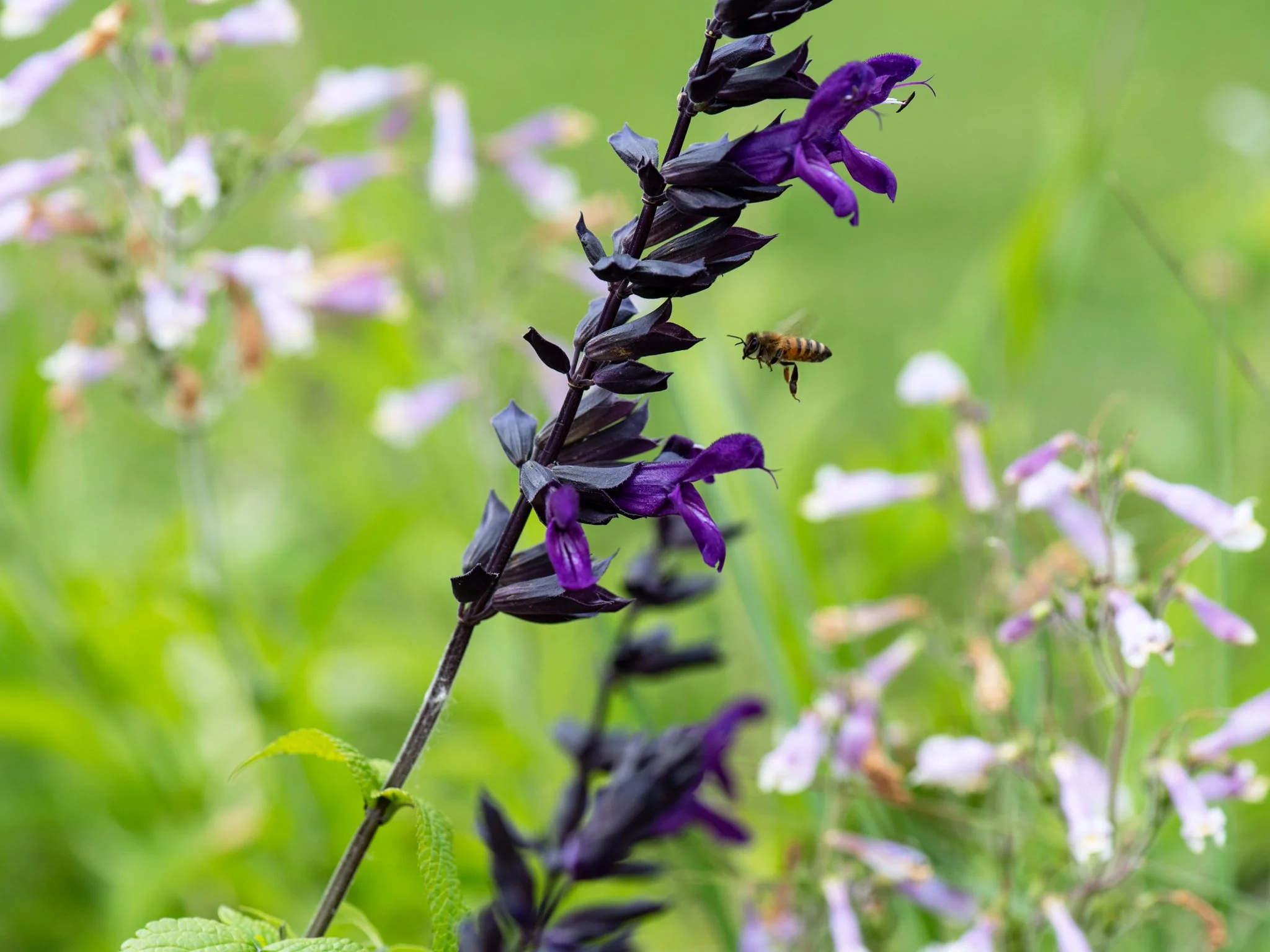
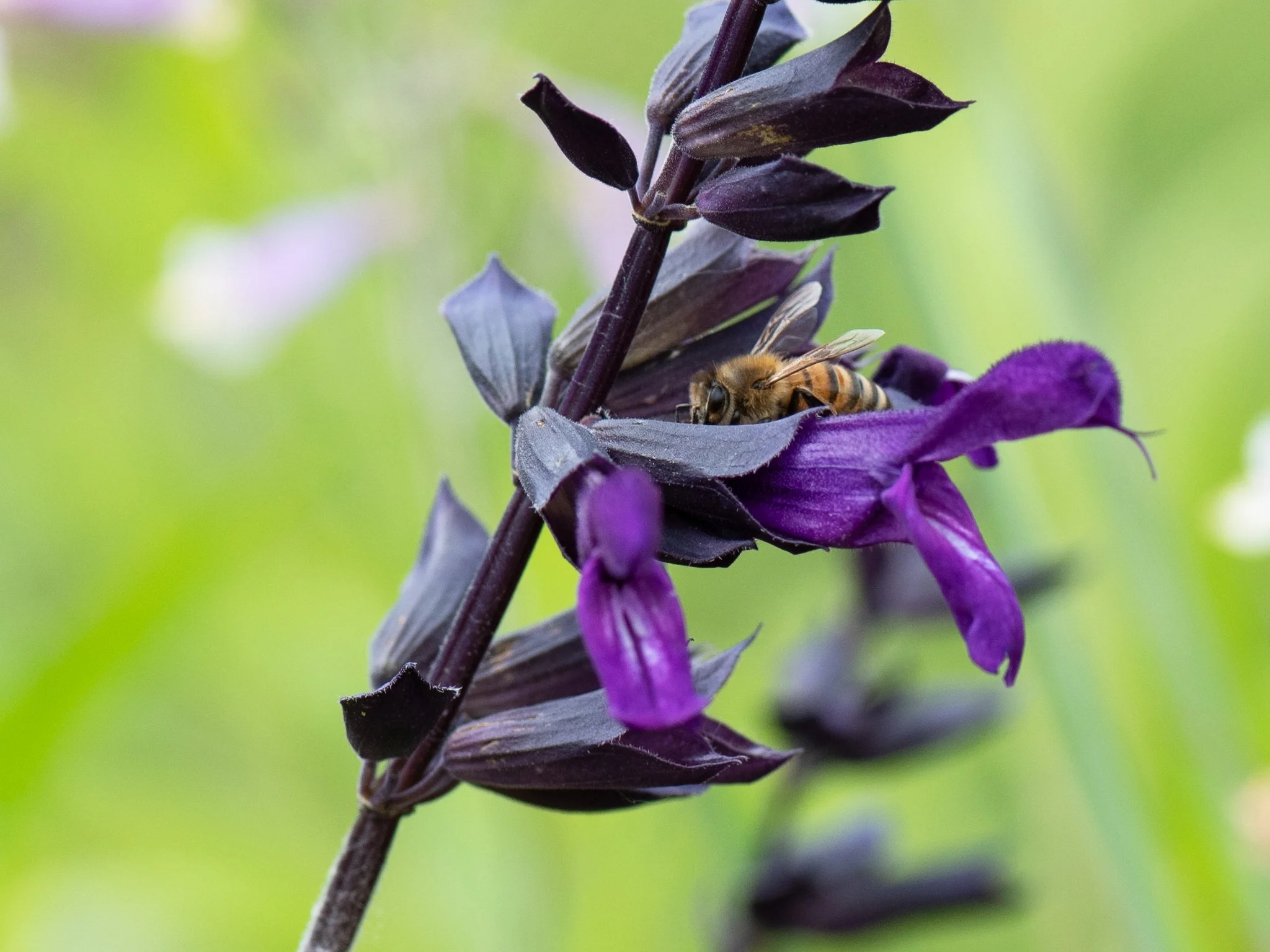
Out in the garden, it’s easy to think you understand what’s happening. A bee lands on a flower, gathers what it needs, and moves on. Simple enough. But stand there a little longer—watch closely—and the story shifts. On a stand of Salvia guaranitica, a small bee ignores the open path and works the base of the bloom instead, taking nectar from the outside. What looks like hesitation turns out to be something else entirely: a different approach, a quieter strategy. The garden isn’t just a place of beauty—it’s a place of decisions, adjustments, and small negotiations playing out in real time.
Working the Edges
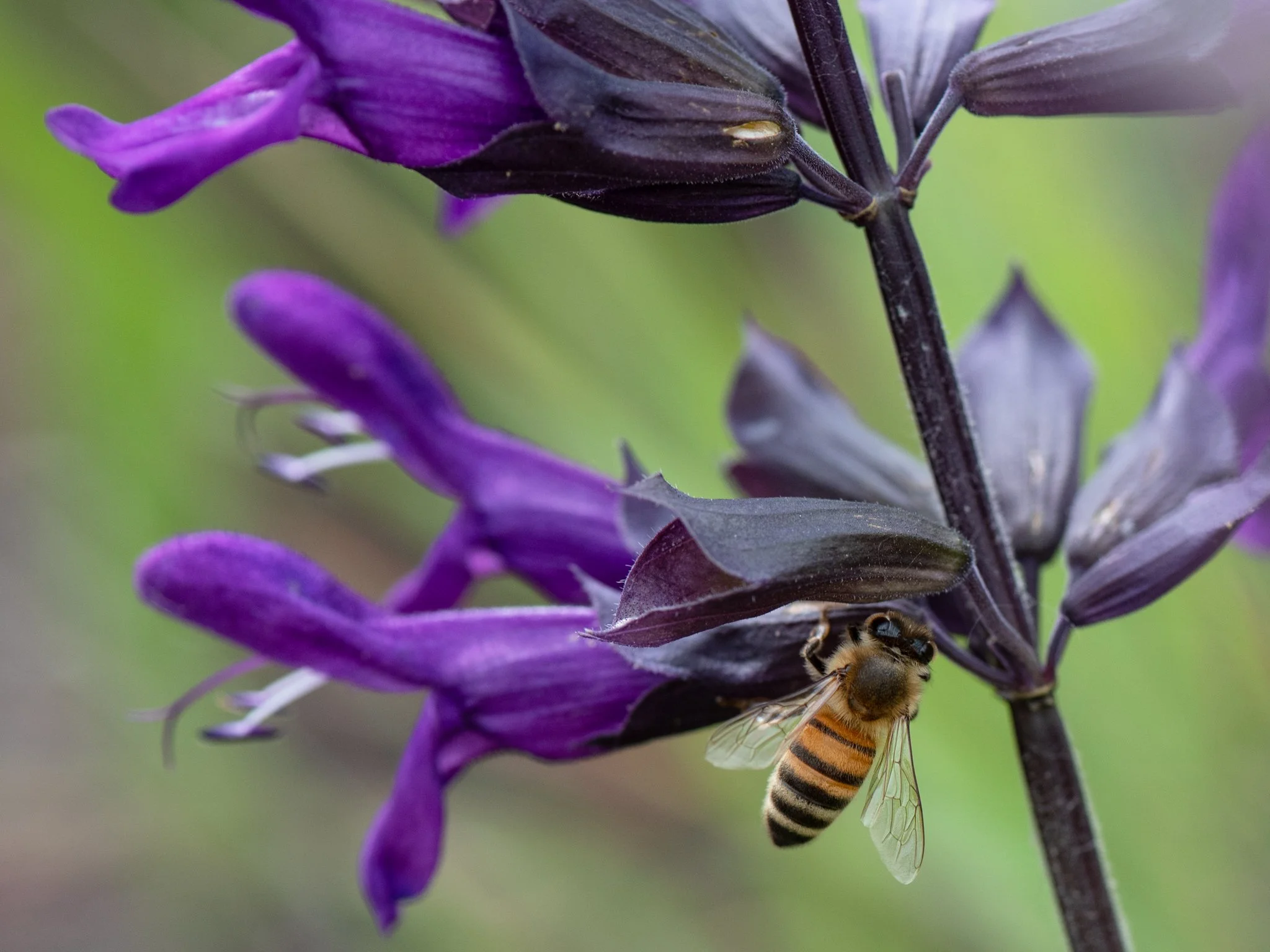
Smaller bees sometimes can’t comfortably fit the tube, so they probe along seams at the base trying to reach nectar without going in. It can look tentative, like they’re “figuring it out,” but it’s more about physical fit than confusion. They follow the contours of the flower, testing where the nectar sits closest to the surface, adjusting with a kind of quiet persistence. It’s an unfolding part of the exchange between insect and flower, shaped as much by limitation as by instinct.
Fuel and Foundation
Nectar is fuel—mostly sugar, powering flight and daily movement. Bees drink it themselves and, in species like honeybees, carry it back to the hive to make honey. Pollen, on the other hand, is protein. It’s what they gather to feed their larvae, less about energy and more like building material—what allows the next generation to grow.
Midnight Sage
Salvia guaranitica has one of those flowers that looks simple at first glance but is built like a narrow hallway with the reward tucked at the far end. The deep tube holds nectar where only certain visitors can easily reach it, so larger bees and hummingbirds tend to be the intended guests.